
Background
As part of our work to strengthen holistic action that implements the SDGs for transformative action on disarmament, gender equality and peace, and mobilise awareness about the importance of local women’s peace work, WILPF engaged around the 9 – 18 July 2018 High-Level Political Forum (HLPF). We monitored the Forum around gender, peace and means of implementation issues, launched the #WomenLead2030 Campaign, and worked with our coalition Women’s Major Group to push for implementation of the SDGs to work for women in conflict.
It is time to assess progress on building societies capable of sustainable development and peace. Addressing systemic barriers is particularly important, since the 2019 HLPF will review SDG 16 on peace, as well as be the first Quadrennial review of the HLPF process.
HLPF 2018
The 2018 HLPF convened under a theme “Transformation Towards Sustainable and Resilient Societies”. It focused on reviewing SDG priority goals on water (Goal 6), energy (Goal 7), cities (Goal 11), consumption (Goal 12), forests (Goal 15), and partnerships/means of implementation (Goal 17).
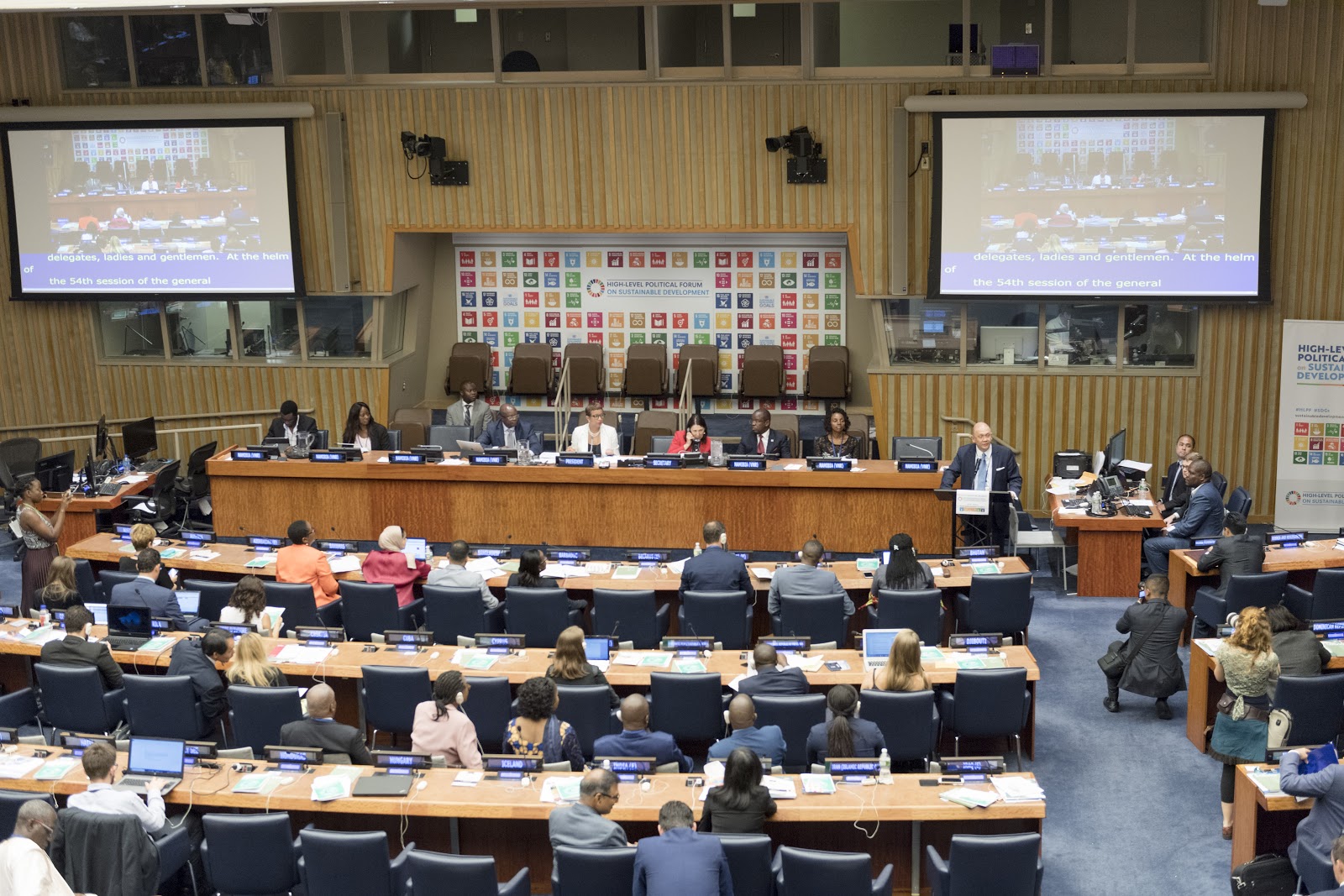
As part of this, the HLPF included an opening segment, discussion reviewing each goal, and thematic reviews, as well as over a hundred of side events. Thematic discussions targeted issues such as building resilience, policy coherence, data and innovation for the SDGs. Side events addressed such issues as gender and energy, drought and migration, rights and meaningful participation and defending Human Rights Defenders (HRDs).
What happened on Gender Equality (Goal 5)?
Although SDG 5 on gender equality was not under review in 2018, there was a high level attention to gender equality issues, especially as mainstreamed across the priority goals under review. This included discussions of how to strengthen action for gender equality through integration of gender issues in city and energy planning, including around human rights and water, and by addressing risks to women human rights defenders and “civil society left behind” including women, indigenous people, poor people, and children to ensure meaningful participation and rights. Women shared experiences about utilising the SDGs to support local calls for action, from demanding women’s participation in formal politics in Uganda to strengthening calls to end GBV in Kenya.
A common theme at least among civil society was the need to address structural obstacles to women’s human rights programming and feminist movement organising. This requires a multi-layered approach that coordinates across layers, and is intentional, deliberate, and tailored to specific actors who have specific access and ability to pull levers of change. Initiatives such as Cities for CEDAW and regional civil society mechanisms, such as the Asia-Pacific Regional Coordination Mechanism (RCM), can facilitate civil society engagement and strengthen implementation through tailored action that promotes policy coherence on gender equality and peace.
What happened on Peace (Goal 16)?
SDG 16 was also not under review in 2018. However, there was significant discussion at the HLPF around strengthening cross cutting action on peace, and on how to build momentum for implementation by the 2019 review of SDG 16.
Initiatives included the Pathfinders’ Roadmap on Peaceful, Just and Inclusive Societies, the 16+ Forum, the SDG16 Data Initiative, and the TAP Goal 16 Advocacy Toolkit, as well as related initiatives including on open governments and data tools including from peace to indigenous peoples (such as from Global Alliance, Institute for Economics and Peace, and the International Peace Institute).
A common theme across these initiatives was the importance of a holistic approach that addresses peace as intersecting across all of the goals Another take-away was the need to not take a technical approach to implementation, but to leverage political support for the SDGs in a way that support local priorities for peace, inclusion, and justice. For example, activists from Somaliland working with Saferworld shared that they were able to use the SDGs to successfully push their government take action on quotas for women’s political participation and a bill addressing violence against women.
There was also some support to reduce investment in military solutions to disarm violence. At a discussion on gender, peace and cities, one diplomat commented: “We don’t manufacture drugs or weapons. But we are inundated. How are we to deal with this?” At another discussion, an advocate floated the idea of calling for an eighteenth SDG to address Disarmament. Jeffrey D. Sachs, Director of the Center of Sustainable Development at Columbia University, in a number of events also supported WILPF’s calls to #MoveTheMoney from war to peace. However, while disarmament was raised, it was not central to any of the major initiatives on peace and the SDGs. Given that states such as the UK have proposed having military aid count toward realising SDG16, clearly addressing this issue is essential.
Although the SDGs are not always translated through a human rights framework, this shows that they can provide a foothold to mobilise behind activist demands when human rights arguments have not translated. However, ensuring policy coherence on other commitments remains critical.
Challenges
This year’s HLPF demonstrated that the 2030 Agenda continues to have a high level of potential for impact, because of the high level of political will to address this issue and way the Agenda brings together diverse communities to address go beyond silos to cross-sectoral issues in innovative ways. However, corporate power, technical approaches, lack of women civil society’s meaningful participation and engagement, and increasing distancing from human rights foundations mean substantial challenges to realising the SDG’s transformative intent remain.
The lack of a human rights-based approach to the implementation of the 2030 Agenda was one key challenge raised by civil society. According to the Danish Institute for Human Rights, 92 per cent of the SDG indicators are linked to international human rights instruments. However, the implementation frameworks of the SDGs involve a much lower bar than human rights. Civil society called upon relevant stakeholders to ensure that the SDGs are underpinned by human rights.
Unjust financial frameworks and poor spending priorities are another critical gap. Sustainable development requires a financial framework that supports development justice, including by curbing illicit financial flows and progressive taxation to reduce concentrations of wealth and economic power. As the UN Secretary-General noted, investing $2 million in prevention can generate net savings of $33 billion per year from averted conflict. However, increasing military expenditure undermines and diverts resources from peace. In addition, austerity measures and regressive taxation imposed by international financial institutions “impede countries’ ability to finance the implementation of the SDGs” as well as build foundations for peace. The 2018 Spotlight Report noted that the problem is not a lack of funding for sustainable development, but poor policy choices on how money is spent. As stated out by Alex Steffen, Co-founder of Worldchanging.com, “Corporate greed is slowing sustainable development down.”
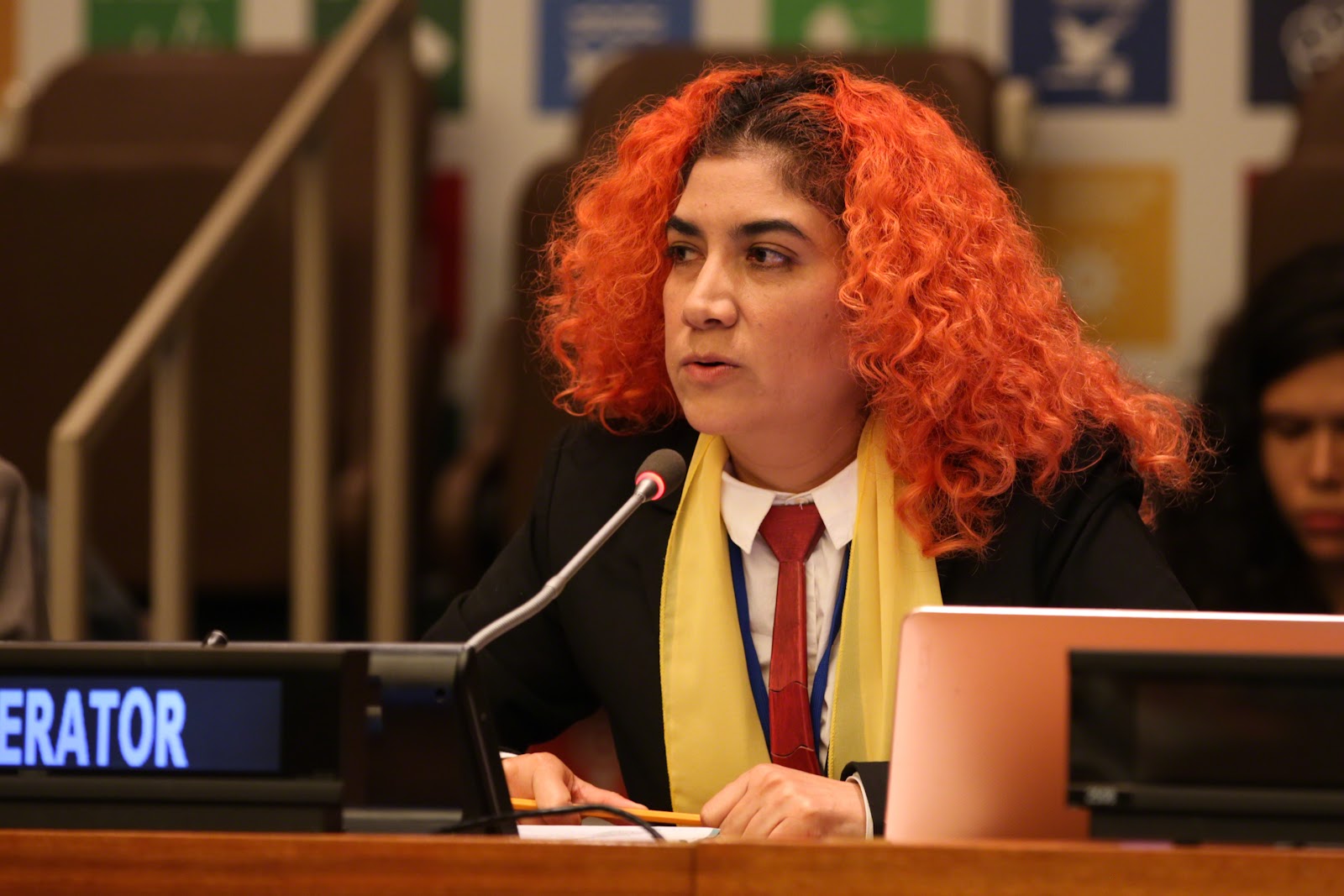
Growing repression and attacks on women human rights defenders (WHRDs) who stand up for their rights and the rights of their communities also remains an urgent challenge. In 2017, 312 human rights defenders were murdered across the globe, 80 per cent of which occured in Brazil, Colombia, Mexico and the Philippines. In Columbia alone, over 200 social and women environmental activists were murdered since 2016. Many Member States representatives called for the need to strengthen the participation of local communities in decision-making. Yet defending defenders requires more concerted action.
Meaningful participation also poses a substantial challenge for the SDG process. In Geneva, there is an established good practice of civil society engagement around human rights bodies which formally recognises independent civil society shadow reports and provides a process for civil society participation and engagement. However, shadow reports are not recognised in the HLPF process. Civil society may provide “spotlight” reports, but they are forced to do so in a constrained time frame (responding to formal Voluntary National Reviews (VNRs) reports submitted sometimes only days before the HLPF), and without formal recognition. In addition, civil society has very limited space at the HLPF, with major group interventions often limited to just a couple of minutes for an entire group (i.e., “women” or “farmers”). Meanwhile, this year’s HLPF had entire day devoted to a “business forum.” Although the VNR Labs, introduced this year, provide one opportunity for Member States to have an open conversation about their gaps and progress, more is needed.
The VNR review would benefit from addressing existing civil society shadow reports already made to the human rights treaty bodies on relevant issues, which would promote policy coherence across human rights and development systems. Since CEDAW General Recommendation 30 also enshrines the Women, Peace and Security Agenda in the human rights system, it would also strengthen coordination on peace and security issues.
Highlights from Voluntary National Reviews:
As part of the 2018 HLPF process, 46 Member States presented their VNRs, reporting on their progress in attaining the 2030 Agenda and sharing good practices in implementation, from Australia and Switzerland to Lebanon and Palestine to Egypt and Niger. Of the submitting states, 40 (87 per cent) countries specifically mentioned SDG 5, 37 (80 per cent) referenced SDG 16, and 40 (87 per cent) discussed the means of implementation (SDG 17).
Despite the frequent references to SDG 5, most VNRs included issues relevant to the WPS Agenda in only a limited fashion. Most member states addressed SDG 5 by focusing primarily action to empower women and address gender-based violence. However, they did not effectively address the impact of state policies and structural constraints to gender equality. Good practices on specific policy changes were limited. Importantly, Namibia reported that they had updated their National Gender Policy and adopted Gender Responsive Budget Guidelines alongside the National Gender Mainstreaming Programme. However, few states reported that they had developed monitoring and evaluation mechanisms, sex-aggregated indicators or clear systems of measuring the SDG 5 progress
SDG 16 reporting was primarily focused on strengthening the rule of law and fighting corruption. States such as Slovakia, Lebanon, Ireland and Malta affirmed the need for the whole-of-government approach, which critically needed. More holistically, Australia and Colombia both affirmed the need to take a whole-of-society approach that strengthens citizens’ rights in decision-making – recognising the importance of civil society as well as government. Germany’s Sustainable Development Strategy also recognised the need for a balance between three sustainability dimensions (economic development, social development, and environmental protection).
At the same time, the countries in conflict, including Iraq, Niger and Azerbaijan and the State of Palestine highlighted in their VNR statements as well as in their statements in the General Debate that they are behind in implementing SDGs due to conflict. They appealed to other Member States not to leave them behind and support conflict resolution, as well as relevant reforms in these countries.
However, focus on national implementation limited the scope for action on global structural barriers to sustainable development and peace. The need to prevent arms transfers, which contribute to violence and conflict including gender-based violence, and violations of women’s human rights were largely ignored. Ireland was one of the few to recognise its extraterritorial obligation for realising peace and sustainable development, as well as to prioritise investment in conflict prevention. Addressing the impact of state arms transfers (around 16.2) on gender-based and other forms of violence (5.2, 16.1) will be critically important in the 2019 review of SDG 16 on peaceful and inclusive societies.
Reporting on SDG17, many VNRs demonstrated that innovative action to #MoveTheMoney is possible: In particular, a few states reported that they used ecological taxation on harmful environmental activities to promote environmentally friendly action through economic incentives rather than regulatory controls. However, this kind of innovation was not taken on peace and security: few decreased their defence budget to free up funds to peacebuilding efforts or gender inequality initiatives. Beyond this, policy coherence for sustainable development did not feature strongly in VNRs, with only a limited number of countries, including Ireland and Switzerland, providing an assessment of the impact of their domestic and foreign policies on sustainable development globally. This is a key gap which must be addressed especially around the impacts of arms on gender-based and other forms of violence (SDG 5.2, 16.1).
At the same time, a number of Member States expressed their commitment to build the capacity of civil society for SDG implementation. Specifically, Lebanon, Singapore and Canada presented good examples of CSO engagement with the establishment of stakeholder engagement mechanisms to engage in the decision making process. Additionally, Ghana stated that they are developing a national monitoring system to link feedback from the community level to the national level. Strengthening the meaningful participation of women civil society and addressing attacks and shrinking spaces on defenders remains a critical area for action.
Ministerial Declaration
The HLPF concluded by adopting a negotiated ministerial declaration. This reaffirms member state commitment to realising the 2030 Agenda and leaving no one behind, and raises key issues to be considered in the 2019 HLPF modalities review.
As part of this, the 2018 HLPF Ministerial Declaration recognises the interlinkages between peace and sustainable development and affirms peaceful, just and inclusive societies based on respect for human rights is necessary for sustainable development (para. 12). It calls upon Member States and relevant stakeholders to redouble efforts to resolve or prevent conflict and to support post-conflict countries, including by ensuring that women have a role in peacebuilding and state-building. While Russia called for a vote on the paragraph affirming gender equality, Canada led cross regional affirmation of its inclusion and the declaration retained this commitment to gender equality and reinforcing the linkages between SDG 5 and the other SDGs.
However, the Ministerial Declaration still had gaps on the importance of engaging with civil society, defending defenders, and as well as concrete action to address structural gaps for implementation and accountability.
Call to Action:
The 2018 High-Level Political Forum has demonstrated that the 2030 Agenda provides a unique space to bring diverse constituencies together and mobilise action that creates a new kind of economic development that promotes women’s human rights and protects the environment. However, as the Women’s Major Group has noted, HLPF discussions today seem more like a circus where poor countries beg for funding from donors. This must not continue.
Realising the transformative intent of the SDGs requires recognising that people are not just left behind by accident: They are excluded as a matter of design. This exclusion is due to policies and priorities that prioritise patriarchal power over people and planet. To improve people lives, we need to disarm violence, invest in gender justice, and build economies and political governance for feminist peace.
As we prepare for the 2019 review of SDG16, we invite you to call on leaders who are leaders on SDG16 and who are under review in 2019 to put implementation of the Women, Peace and Security Agenda at the heart of their action on peaceful societies:
- Governments should commit to concrete steps to implement the WPS Agenda as part of commitments to mobilise further action to accelerate implementation of SDG16 at the UNGA Ministerial Review September 2019;
- Governments should commit to reporting on WPS implementation at the July 2019 HLPF and to making concrete steps to implement the WPS Agenda at the September 2019 UNGA Ministerial Review as part of commitments to mobilise further action to accelerate implementation of SDG16;
- Governments should refrain from justifying military aid towards fulfilment of their obligations on SDG16;
- Governments should report on the extraterritorial impact of policies on women and girls, including on arms exports, consistent with the Arms Trade Treaty and SDG16.2 as part of their VNR process to strengthen policy coherence and extraterritorial accountability;
- Governments should integrate human rights reviews and address civil society shadow reports on human rights as part of the VNR process to strengthen policy coherence and human rights accountability;
- Governments should address barriers to women civil society participation including by democratising spaces at local, national, regional and global levels on SDG design, monitoring and implementation, consistent with Rio Principle 10; this should include strengthening core, ongoing funding for local women civil society and strengthening regional civil society engagement mechanisms;
- International Financial Institutions should refrain from pushing for austerity measures and instead support an economic model that supports people, communities and territories, including by supporting social safety nets to ensure women’s economic, social and cultural rights, and gendered reparations to promote justice and address harms of militarism and war


