The years 2015 through 2025 have been the eleven hottest years on record – and that same period is one in which governments have increased military spending every single year. This is not a coincidence but reflects the ways in which our fossil-fueled capitalist order, driven by militarism and imperialism, is imperiling our planet and a livable future for all species on it.
We are glad to see that the process for legally-binding Fossil Fuel Treaty initiated in Santa Marta will continue in the Pacific next year, with Tuvalu and Ireland having committed to hosting a second conference. In the years to come, we hope to see concrete action from governments towards a just, rapid, and equitable transition that does not replicate the same patterns of violence, conflict, and destruction inherent to fossil fuels.
What Was the Santa Marta Conference?
From April 24 to 29, the governments of Colombia and the Netherlands brought together 57 countries, subnational governments, and civil society including Indigenous and Afro-descendant people, feminists, social movements, trade unions, and youth to develop concrete solutions towards a fossil fuel phaseout. This conference responded to an absence of leadership within the UNFCCC process, which, due to sabotage and cooptation from major polluters and oil producing states, has failed to adequately act with the urgency and focus required. Therefore, Santa Marta brought together a growing coalition of those countries and actors who are willing and ready to take action towards a just transition without further negotiation or delay. The conference covered three main topics: overcoming economic dependence, transforming supply and demand, and advancing international cooperation and climate diplomacy.
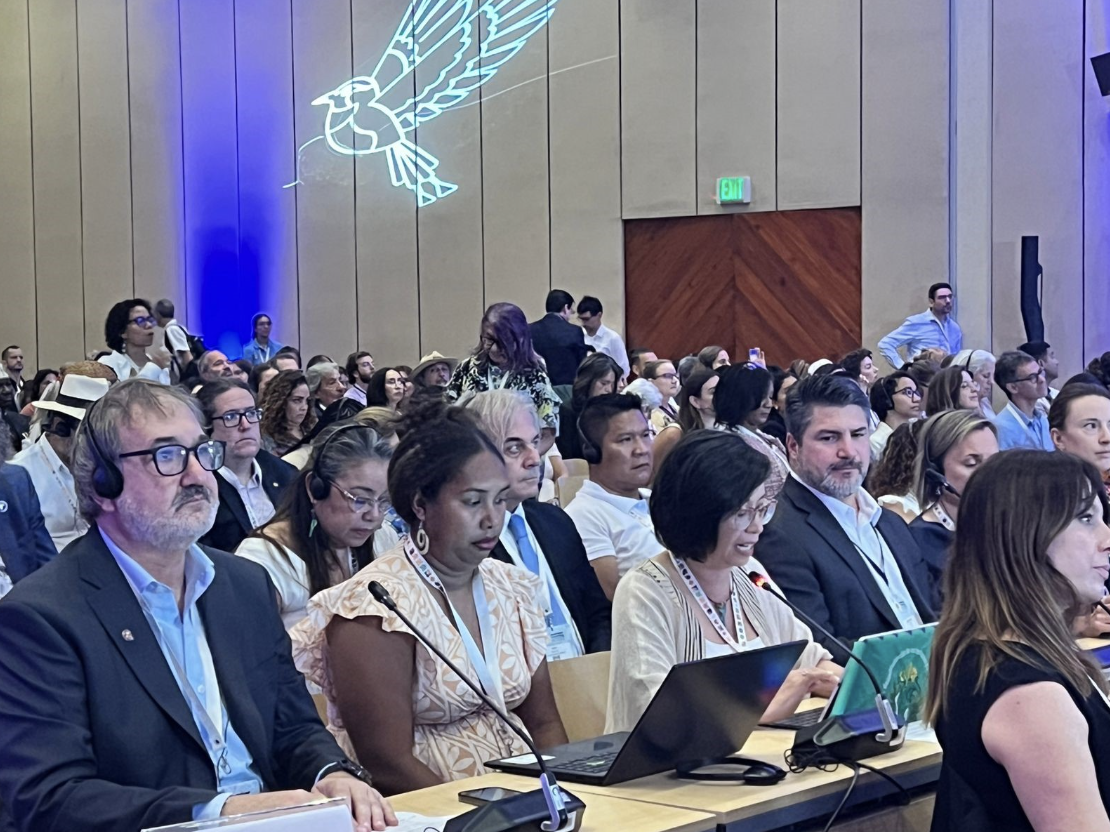
During the weeklong conference, there were various kinds of convenings and meetings, including an academic scientific pre-conference, a three-day People’s Summit of civil society with regional and constituency-based meetings, a parliamentarians meeting, and a People’s Assembly which brought together civil society and the Colombian government representatives. The high-level segment on 28 and 29 April was attended by ministers, climate envoys, and some civil society. The process of preparing for the conference included written submissions, virtual dialogues, and negotiations within different civil society sectors about our official positions for the conference, as well as our priorities for the governments to discuss in the high-level segment.
The governments who attended were: Angola, Antigua and Barbuda, Australia, Austria, Bangladesh, Belgium, Brazil, Cameroon, Canada, Chile, Colombia, Denmark, Dominican Republic, the EU, the Federated States of Micronesia, Finland, France, Germany, Ghana, Guatemala, Iceland, Ireland, Italy, Jamaica, Kenya, Luxembourg, Malawi, the Maldives, the Marshall Islands, México, Mongolia, the Netherlands, Nepal, Nigeria, Norway, New Zealand, Palau, Panama, Philippines, Portugal, Saint Lucia, Senegal, Singapore, Slovenia, the Solomon Islands, Spain, Sweden, Switzerland, Tanzania, Turkey, Tuvalu, Uganda, the UK, Uruguay, Vanuatu, the Vatican and Vietnam. Notably, major polluters such as the United States, Russia, and China were not invited to the conference, to prevent them from blocking progress. However, subnational governments such as the US State of California, an endorser of the Fossil Fuel Treaty, were present, demonstrating that political will exists at the subnational level in the face of climate denialism from the federal government.
Feminist Advocacy for a Just Transition and Demilitarisation
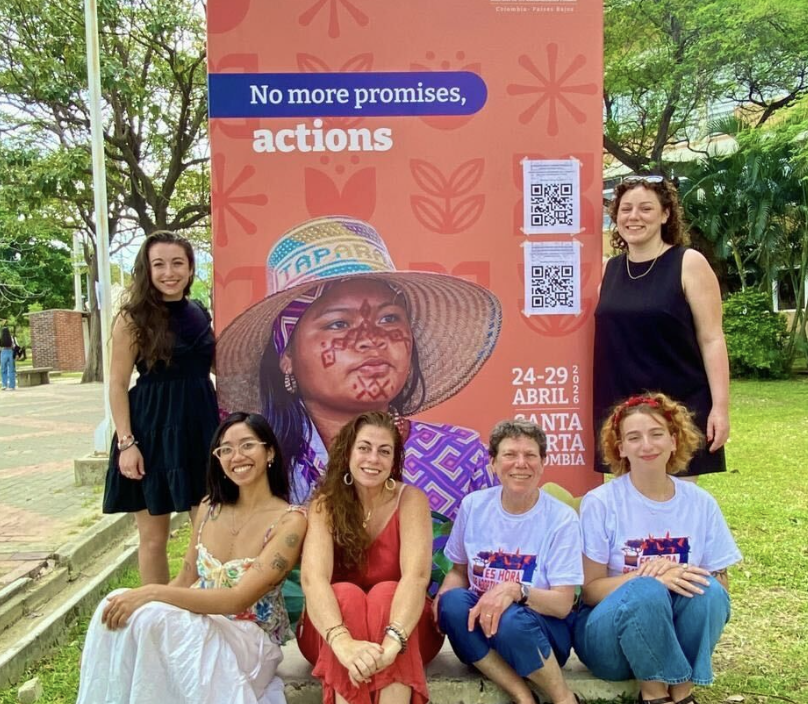
WILPF was represented in person at the conference by Diana Salcedo Lopez and Andrea Castillo Olarte of LIMPAL Colombia and Genevieve Riccoboni from WILPF’s International Secretariat. In the months leading up to the conference as well as in Santa Marta, WILPF has been active in the Women and Diversities sector, which is a feminist caucus aligned with our UNFCCC coalition, the Women and Gender Constituency.

As the Women and Diversities Sector, we put together a strong Feminist Vision Statement for the conference which we finalized together in Santa Marta. The paper begins:
“Our current fossil-fueled economic model has led to the climate crisis and extreme violations of human rights, the rights of nature and Mother Earth, and the rights of women, girls and gender-diverse people (particularly those who belong to Indigenous, Black, and Afrodescendant, and peasant communities). This illuminates the profound, intertwined injustices embedded in fossil fuel dependency, within the Global South and among systemically oppressed peoples and communities in the Global North. It is clear that transforming this entrenched, extractive economic model is the main barrier facing us globally. This prevailing economic system is built on the exploitation of gendered, class-based, and racialized labor, particularly of the unpaid and unrecognized care and domestic work led by migrants, women, and gender-diverse people. It is built on an unequal transfer of value, including raw materials and labor, from the Global South to the Global North, enriching and enabling an energy transition for the benefit of some to the detriment of many. The imperial violence of the Global North is one of the most significant barriers facing a transition away from fossil fuels, with the perpetuation of militarized domination to sustain fossil fuel dominance and access to critical minerals severely degrading the environment and threatening communities. This fossil-fueled militarization demands accountability and alternative forms of international solidarity that value cooperation over competition, extraction, and death.”
At the People’s Summit, we also adopted, along with civil society from all sectors and constituencies, a People’s Declaration for a Rapid, Equitable, and Just Transition for a Fossil-Free Future. This declaration mentions militarism and military activity, including imperial wars of aggression, over 20 times. This is the result of the persistent advocacy of peace, anti-militarist, and anti-imperialist mobilising, including from WILPF, which has highlighted that militarism needs to be central to climate conversations, and that peace is a climate solution.
Disappointingly, the list of co-host takeaways from the conference do not address these issues outside of a reference to conflict in the Middle East, showing that governments have more work to do in terms of making these links. However, the presence of language on armed conflict, militarism, and imperialism in the civil society submissions and synthesised outcomes, as well as references to a Fossil Fuel Treaty, is a very positive step that demonstrates that civil society is increasingly recognising the need for addressing these structural barriers. In their video to announce the 2027 conference, Tuvalu speaks of a world that has darkened due to war and climate crisis – a clear call to action.
Launch of New Report with the Fossil Fuel Treaty Initiative: the Double Dividend
In line with our longstanding advocacy on demilitarisation and ecological justice, WILPF used the Santa Marta conference to also advcocate for urgent reduction of military spending to prevent conflict and to finance a just transition away from fossil fuels.
With the Fossil Fuel Treaty Initiative, WILPF was proud to launch a new report in Santa Marta called The Double Dividend: How Reducing Military Spending Can Finance a Just Transition – The Fossil Fuel Treaty as a Tool for Justice and Peace. The report was written by Katrin Geyer and Genevieve Riccoboni and makes the case that reducing military expenditure is one of the most significant and impactful levers available to finance a just global transition away from fossil fuels, and to simultaneously tackle the devastating impact of militarism on the climate. In a recent blog, Katrin Geyer and Mitzi Jonelle Tan outline eight reasons why the world cannot afford to keep choosing bombs over a livable planet, spotlighting some of the main findings of the report.
The report specifically analyses how reducing military spending would provide the required financing while facilitating trust building, international cooperation and diplomacy. In practical terms, redirecting military expenditure toward the Fossil Fuel Treaty’s just transition framework would meaningfully expand resources for renewable energy deployment, worker retraining, community-led economic diversification, environmental remediation in frontline communities and support a system change away from extractivism and structural violence while simultaneously reducing militaries’ reliance on fossil fuels. This is essential because, despite a rise in efforts to “green” or “climate-proof” militaries in recent years, there is no true alternative to militaries’ dependence on fossil fuels, and war will continue to cause devastation to the environment and climate.
We launched The Double Dividend at an event, Fossil Fuels, Militarism, and the Path to Peace: A Feminist Just Transition. At the event, moderated by María Antonia Pérez of Peace Boat, there were presentations on the different ways in which militarism, war, genocide, and injustice are connected to fossil fuels. There were presentations from Ellie Kinney of the Conflict and Environment Observatory (CEOBS), Genevieve Riccoboni from WILPF, Dearbhla Richardson of the Fossil Fuel Treaty Initiative, Andrea Castillo Olarte of LIMPAL Colombia, Ana Sanchez from the Global Energy Embargo for Palestine, and Mitzi Jonelle Tan, a climate justice activist from the Philippines. The event can be streamed below on YouTube, and more information on the event is available on Peace Boat’s website.

WILPF’S Mobilisation and Movement-Building in Santa Marta
WILPF participated in many different spaces during the Santa Marta conference, meeting with other activists and members of civil society as well as governments. Our key messages throughout the conference preparations as well as during the conference were on demilitarisation; reducing military spending to finance a global just transition; pushing for a legally-binding Fossil Fuel Treaty; advancing ecofeminist visions of care and wellbeing; and addressing root causes of war, genocide, and the climate crisis that are linked to interlocking systems of capitalism, militarism, colonialism, and patriarchy.
On 24 April, we participated in the first day of the academic pre-conference, which contained different workstreams on a variety of scientific, financial, legal, and thematic topics. Specifically, we participated in the workstream on “Beyond Extractivism”, which convened practical discussions on how to avoid further exploitation, violence, and violations of human rights, including Indigenous rights, as we advance a fossil fuel phaseout. We raised the importance of more broadly democratising decisionmaking and aligning with a variety of international human rights standards, including UNDRIP but also CEDAW and other obligations. In addition, we discussed the many links between the fossil fuel industry and the military-industrial complex, and the need for essential transition minerals to not be siphoned away by militaries.
On 25 April, we held our Women and Diversities sectoral meeting, where we finalised our collective position paper for the conference. This feminist space was co-coordinated by the Women’s Environment and Development Organization (WEDO) and Women Engage for a Common Future (WECF) and brought together feminists from around the world, including many Colombian and other Latin American feminist leaders. At this meeting, we also worked on our final contributions to the collective People’s Declaration. We presented our feminist vision statement at the People’s Summit, which was held on 26 April, which is also where the overall People’s Declaration was launched.
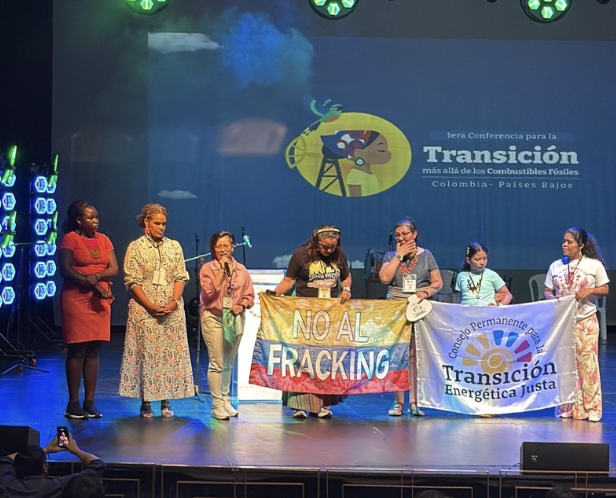
Following our sectoral meetings, feminists engaged directly with Colombian government representatives at the People’s Assembly. A more limited number of civil society representatives from each sector – including feminists, Indigenous Peoples, NGOs, Afro-Descendant people, youth – were invited to participate in the two-day high-level segment along with governments on 28 and 29 April. Diana María Salcedo López of LIMPAL Colombia was selected as one of the representatives of the Women and Diversities Sector at the high-level segment, and Diana also was selected to present our feminist vision at the People’s Assembly on 27 April.
On 27 April, WILPF took part in an online link-up between activists in Santa Marta and those gathered in New York during the Nuclear Non-Proliferation Treaty (NPT) meetings, which was facilitated by Warheads to Windmills. The exchange explored parallels between disarmament processes and the Fossil Fuel Treaty, as the latter has drawn inspiration from the disarmament movement, particularly the Treaty on the Prohibition of Nuclear Weapons and other successful disarmament and arms control treaties. This was an important opportunity to reinforce the need for both a fossil fuel-free and nuclear-free future, and to galvanise momentum for addressing the root causes of injustice.
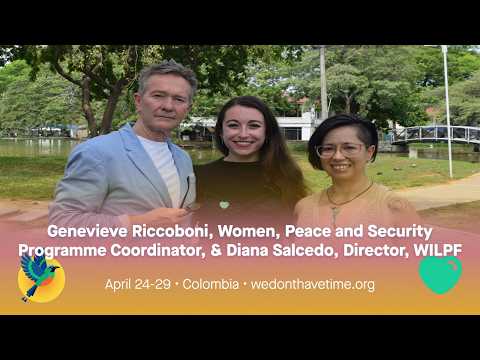
Genevieve and Diana also participated in a short interview with the climate news network We Don’t Have Time, talking about feminism and anti-militarism. See the full interview below:
What’s Next?
The governments of Tuvalu and Ireland have announced that together they will organise a follow-up conference in the Pacific in 2027. This was a key outcome of Santa Marta that means that the discussions initiated in Colombia will continue in the coming months through an organised process. Another outcome is that three workstreams including one on national and regional roadmaps for fossil fuel phaseout will be created. These roadmaps will link with Nationally-Determined Contributions (NDCs). Additionally, there are other workstreams which will look at the global financial system and at fossil fuel-intensive trade.
As WILPF, one key demand which we had for the Santa Marta conference which was outlined in our Double Dividend report is for the establishment of a working group to investigate routes by which countries can agree on the universal, equitable redistribution of military expenditure to support a Global Just Transition Fund. We will continue to centre this demand for the next conference and in our advocacy both with states and with civil society organisations across the board. Although there was broad-based recognition among civil society of the links between militarism, imperialism, and fossil fuels in Santa Marta, this more specific advocacy on demilitarisation will help to drive more concrete momentum towards structural change.
Santa Marta demonstrated that the world cannot wait any longer to phase out fossil fuels, and that the conversation that must happen is how to do this in a way that is just, equitable, and truly addresses the root causes of violence and injustice without perpetuating them further. Civil society movements around the world showed in Santa Marta that we are prepared with the structural solutions and concrete ideas needed to drive this change, and it is time for governments to come on board, without delay, and take action.
Key Links and Further Reading
- The Double Dividend report press release
- All synthesized civil society’s contributions to the Transitioning Away Conference, including the Women and Diversities Sector synthesis