Celebrating Feminists’ Voices, Inspiring Global Peace

Invest in Women’s Organisations for a Change

19 October 2016

movethemoney_fbcoverIn 2015, there was a $1.6 trillion global arms trade, yet in 2012-2013 only 2% of aid on peace and security to conflict-affected states targeted gender equality. Furthermore, a global survey by AWID found 740 women’s organisations worldwide in 2010 had a combined income of only $106 million – less than the cost of one F-33 fighter plane ($137 million).  As this shows, the problem for funding gender equality and the feminist movement is not a lack of funding, but poor choices in using the money we have.

As part of WILPF’s work to show that ‘You Get What You Pay For,’ we have recently launched an interactive toolkit to #MoveTheMoney from a political economy of war to one of peace and gender justice. This blog post provides a look from our academic network on why it is important to #MoveTheMoney to the feminist movement for peace.

by Peace A. Medie, member of WILPF Academic Network

Women’s organisations have initiated and led efforts to advance women’s rights globally. These organisations, which include grassroots groups and NGOs, have brought domestic and international attention to women’s rights violations and to discrimination against women, and have pressured international organisations and states to deal with these problems. In Liberia and other post-war states in Africa, they have urged governments to address women’s concerns and have provided vital health, social, and economic services and support to girls and women. Yet, despite the immense contribution that they are making, many of these organisations are severely underfunded. This lack of funding puts the advancement of women’s rights and gender equality, at risk.

Women’s organisations have made women’s rights an international policy issue. In addition to placing women’s rights on the agenda of the UN and other international organisations, they have pressured states to enact laws and introduce policies to improve girls’ and women’s physical security, their health, education, their participation in politics, and their economic advancement. These organisations have also played a key role in the implementation of these laws and policies.

In Liberia, where I have lived and worked, women’s organisations have partnered with the UN and other international organisations to influence the enforcement of women’s rights laws. One area in which they have been active is in the enforcement of laws to protect girls and women from violence. For example, the Association of Female Lawyers of Liberia (AFELL) urged the Ministry of Justice to establish the Sexual and Gender Based Violence Crimes unit. Established in 2009 in Monrovia, the unit specialises in prosecuting sex crimes. AFELL also lobbied for the establishment of Criminal Court E, a court dedicated to prosecute sex crimes. They have also played a role in developing the standards of procedure in the criminal justice sector. AFELL participated in drafting the Sexual Assault and Abuse Police Handbook for the Women and Children Protection Section of the Liberia National Police. And when these specialised agencies have failed to meet expectations, AFELL has advocated for improvements.

Their work has been complemented by a host of women’s organisations that provide psychosocial and financial support for survivors of violence. These organisations run safe homes that shelter battered women, help rape survivors to relocate to new neighbourhoods in order to escape stigmatisation, and provide job training for them. Their actions are mirrored across Africa, and the globe, and make a huge impact in the lives of girls and women.

It is for this reason that the underfunding of women’s organisations is a pressing problem. According to a recent report by Gendernet, a subsidiary body of the Organisation for Economic Cooperation and Development, only 0.5 percent of funding to promote women’s rights and equality went to women’s organisations. In Liberia, smaller organisations without the staff and expertise needed to successfully apply for these grants and to prepare reports are often at a disadvantage. Donors’ preference for disbursing short-term funding has limited what organisations are able to accomplish while donor-driven (instead of needs-driven) projects lead to the side-lining of problems that are not on the international radar but require urgent action.

It is, therefore, imperative that donors and states prioritise the funding of women’s organisations and that they change how they allocate and disburse this funding. They can reach smaller organisations and reduce the administrative burden on them by channelling grants through women’s funds such as the Global Fund for Women and the African Women’s Development Fund. WILPF supports AWID’s recommendations for donors to move away from short-term projects and towards multi-year and core funding in order to ensure project sustainability and to support capacity building within recipient organisations as well as a vibrant feminist movement.

Women’s organisations have been at the forefront of the campaigns for women’s rights and gender equality. They have played a key role in much of the progress that has been made in these areas and have the potential to bring about even greater transformation though their influence on the policy implementation process. Donors and states should, therefore, support their efforts to improve all aspects of girls’ and women’s lives.

The time is now to #MoveTheMoney from war to peace and gender justice: Invest in women’s organisations.

About the author
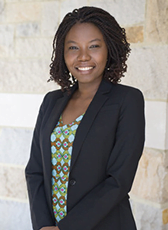
Peace A. Medie


Peace A. Medie is an Oxford-Princeton Global Leaders Fellow. She is a Postdoctoral Research Fellow at the Niehaus Centre for Globalisation and Governance, Princeton University.


Share the post

Matt Mahmoudi

Matt Mahmoudi (he/him) is a lecturer, researcher, and organizer. He’s been leading the “Ban the Scan” campaign, Amnesty International’s research and advocacy efforts on banning facial recognition technologies and exposing their uses against racialized communities, from New York City to the occupied Palestinian territories.

Simple blue user icon on a light blue background, featuring a circular head and rounded shoulders, often used as a placeholder profile image.

Hanne Peterson

Europe Alternate Regional Representative

More about Hanne Peterson coming soon.

Your donation isn’t just a financial transaction; it’s a step toward a more compassionate and equitable world. With your support, we’re poised to achieve lasting change that echoes through generations. Thank you!

Thank you!

Person with short dark hair, glasses, and a red and black patterned jumper stands with arms crossed against a plain white wall.

Diana María Salcedo López

VICE-PRESIDENT

Diana María Salcedo López holds a degree in Political Science from the National University of Colombia, a Master’s degree in Women’s, Gender and Citizenship Studies from the University of Barcelona, and a Master’s degree in Human Rights, the Rule of Law and Democratisation from the University of Alcalá de Henares in Madrid. A feminist and anti-militarist, she has a solid track record spanning two decades working as a consultant for non-governmental organisations, international cooperation agencies, the United Nations and state bodies in Colombia. 

Her work has focused on safeguarding women’s rights, incorporating a gender and intersectional perspective into public policy, strengthening the social fabric amongst women who are victims of the armed conflict, and consolidating local peace-building processes. 

She currently serves as director of the Colombian section of the Women’s International League for Peace and Freedom (LIMPAL Colombia), where she leads initiatives on issues such as feminist approaches to the energy transition, the protection of women human rights defenders, the implementation of the Women, Peace and Security agenda, and advocacy in international forums. She also represents the organisation on the Special Women’s Body for Monitoring the Peace Agreement and on the Intersectoral Commission on Security Guarantees for Women Human Rights Defenders and Women Leaders in Colombia. 

A woman with straight, light brown hair and glasses stands indoors by a window, wearing a blue shirt and black blazer. The background is softly blurred with buildings and trees visible outside.

Desirée Sterner

VICE-PRESIDENT

Desirée Sterner currently serves as President of the Swedish Section (IKFF), a role she has held since 2023. Her engagement with WILPF began at the grassroots level through the local branch in Lund/Malmö during her university years. Desirée brings a deep substantive understanding of WILPF’s core issues, rooted in academic training in gender, peace and security (LSE), war studies (Swedish Defence University), peace and conflict studies, and human rights (Lund University), combined with several years of practical advocacy, movement-building and organisational leadership work in Swedish civil society.  

A woman in traditional African attire stands against an orange background, wearing a patterned headwrap, white dress with colourful trim, layered necklaces, bracelets, and a blue ring, with her hand resting on her chin.

Sylvie Jacqueline Ndongmo

PRESIDENT

Sylvie Ndongmo, is a Cameroonian peacebuilder, feminist leader, civil society actor and Women, Peace and Security expert with over 30 years of experience in peacebuilding, mediation, and gender equality advocacy. She serves as International President of the Women’s International League for Peace and Freedom (WILPF) and is the founder of WILPF Cameroon and Executive Secretary of Women Peace Initiatives. She coordinates the Women and Youth Early Warning Monitoring Room in Cameroon and was recently appointed to the African Union Advisory Panel on Democratic Elections and Governance in Africa. Her work focuses on advancing women’s leadership, conflict prevention, and sustainable peace through feminist, inclusive, and intergenerational approaches.  

WILPF Afghanistan

In response to the takeover of Afghanistan by the Taliban and its targeted attacks on civil society members, WILPF Afghanistan issued several statements calling on the international community to stand in solidarity with Afghan people and ensure that their rights be upheld, including access to aid. The Section also published 100 Untold Stories of War and Peace, a compilation of true stories that highlight the effects of war and militarisation on the region. 

IPB Congress Barcelona

WILPF Germany (+Young WILPF network), WILPF Spain and MENA Regional Representative

Lorem ipsum dolor sit amet, consectetur adipiscing elit. Mauris facilisis luctus rhoncus. Praesent eget tellus sit amet enim consectetur condimentum et vel ante. Nulla facilisi. Suspendisse et nunc sem. Vivamus ullamcorper vestibulum neque, a interdum nisl accumsan ac. Cras ut condimentum turpis. Vestibulum ante ipsum primis in faucibus orci luctus et ultrices posuere cubilia curae; Curabitur efficitur gravida ipsum, quis ultricies erat iaculis pellentesque. Nulla congue iaculis feugiat. Suspendisse euismod congue ultricies. Sed blandit neque in libero ultricies aliquam. Donec euismod eget diam vitae vehicula. Fusce hendrerit purus leo. Aenean malesuada, ante eu aliquet mollis, diam erat suscipit eros, in.

Demilitarisation

WILPF uses feminist analysis to argue that militarisation is a counter-productive and ill-conceived response to establishing security in the world. The more society becomes militarised, the more violence and injustice are likely to grow locally and worldwide.

Sixteen states are believed to have supplied weapons to Afghanistan from 2001 to 2020 with the US supplying 74 % of weapons, followed by Russia. Much of this equipment was left behind by the US military and is being used to inflate Taliban’s arsenal. WILPF is calling for better oversight on arms movement, for compensating affected Afghan people and for an end to all militarised systems.

Militarised masculinity

Mobilising men and boys around feminist peace has been one way of deconstructing and redefining masculinities. WILPF shares a feminist analysis on the links between militarism, masculinities, peace and security. We explore opportunities for strengthening activists’ action to build equal partnerships among women and men for gender equality.

WILPF has been working on challenging the prevailing notion of masculinity based on men’s physical and social superiority to, and dominance of, women in Afghanistan. It recognizes that these notions are not representative of all Afghan men, contrary to the publicly prevailing notion.

Feminist peace​

In WILPF’s view, any process towards establishing peace that has not been partly designed by women remains deficient. Beyond bringing perspectives that encapsulate the views of half of the society and unlike the men only designed processes, women’s true and meaningful participation allows the situation to improve.

In Afghanistan, WILPF has been demanding that women occupy the front seats at the negotiating tables. The experience of the past 20 has shown that women’s presence produces more sustainable solutions when they are empowered and enabled to play a role.