The Human Rights Programme contributes to advancing WILPF’s vision for feminist peace through integrated human rights analysis, advocacy, research and training.
In our advocacy within United Nations (UN) human rights bodies, we connect and highlight interlinkages between human rights, disarmament, gender, the Women, Peace and Security Agenda, non-discrimination, socio-economic justice and the environment. We highlight the human rights impacts of the arms trade, nuclear weapons and military spending, push for justice and demand prioritisation of social justice and ecological well-being.
To this end, we support the participation of women human rights defenders and feminist activists within UN human rights bodies, identifying opportunities for advocacy and providing technical expertise and training to facilitate that engagement. Through our active collaborations, especially with human rights and feminist organisations, we strategise, build on synergies and carry out collective actions to advance human rights.
WILPF has been actively involved in promoting peace, human rights and gender justice since we were founded in 1915. From its creation, WILPF has understood that the enjoyment of human rights for all is the cornerstone for peace.
While our human rights work has evolved over the decades in response to changing global circumstances, our core commitment remains unchanged: to advance the enjoyment of freedom, human rights and justice for all without discrimination based on gender or any other grounds.
In 2012, WILPF established the Human Rights Programme to consolidate and strengthen its analysis and advocacy efforts with international human rights bodies, in order to influence policy at both the national and international levels. WILPF’s work on human rights intersects with work on other thematic areas or on countries.
Since 1915, WILPF has named war profiteering and militarism as major obstacles to peace. Militarism diverts resources into weapons and conflict, fuels violence, and reinforces harmful power dynamics. This timeline showcases key milestones in WILPF’s human rights advocacy on arms since 2012.
Building on this legacy, our Human Rights Programme calls for an end to the global arms trade, weapons production, and military spending. We work to hold governments accountable to their international obligations and to seek justice for human rights violations linked to arms, connecting this work to our feminist peace and Women, Peace and Security (WPS) advocacy. Through research, UN advocacy, human rights reviews, and civil society alliances, WILPF has played a key role in shaping the understanding of weapons-related issues as human rights concerns within the UN system.
Note: This work is led by WILPF’s Human Rights Programme, often in collaboration with other WILPF programmes such as Reaching Critical Will and PeaceWomen. Before the Human Rights Programme was established in 2012, arms-related human rights advocacy was carried out by former Secretary-General, Madeleine Rees, together with these teams.
“The UN system must take the Treaty into account in all of its organs, including its human rights bodies, in order to ensure that the implementation effectively contributes to preventing human suffering.”
- WILPF, 2013
In 2012, WILPF and the International Action Network on Small Arms (IANSA) Women’s Network played a key role in ensuring that the Arms Trade Treaty (ATT) recognised the gendered impacts of arms. In July, as ATT negotiations were underway, WILPF co-hosted a side event at UN headquarters with IANSA, the International Alliance of Women, and UN Women, highlighting the link between CEDAW and the ATT.
Later that month, the CEDAW Committee issued a statement calling for gender to be included in the treaty— a significant step forward. When the ATT was adopted in April 2013, it included groundbreaking language requiring states to consider the risk that arms might be used to commit or facilitate gender-based violence.
WILPF continues to advocate for its effective implementation, emphasizing human rights, international humanitarian law, and gender impact assessments.
WILPF drafted a statement for the HRC welcoming the annual report of the Special Representative of the Secretary-General for Children and Armed Conflict (A/HRC/21/38), particularly its focus on the use of explosive weapons in populated areas. We expressed concern about the lack of attention to the role of small arms and urged states to take concrete steps to curb the use of explosive weapons and provide stronger protection for children in the future.
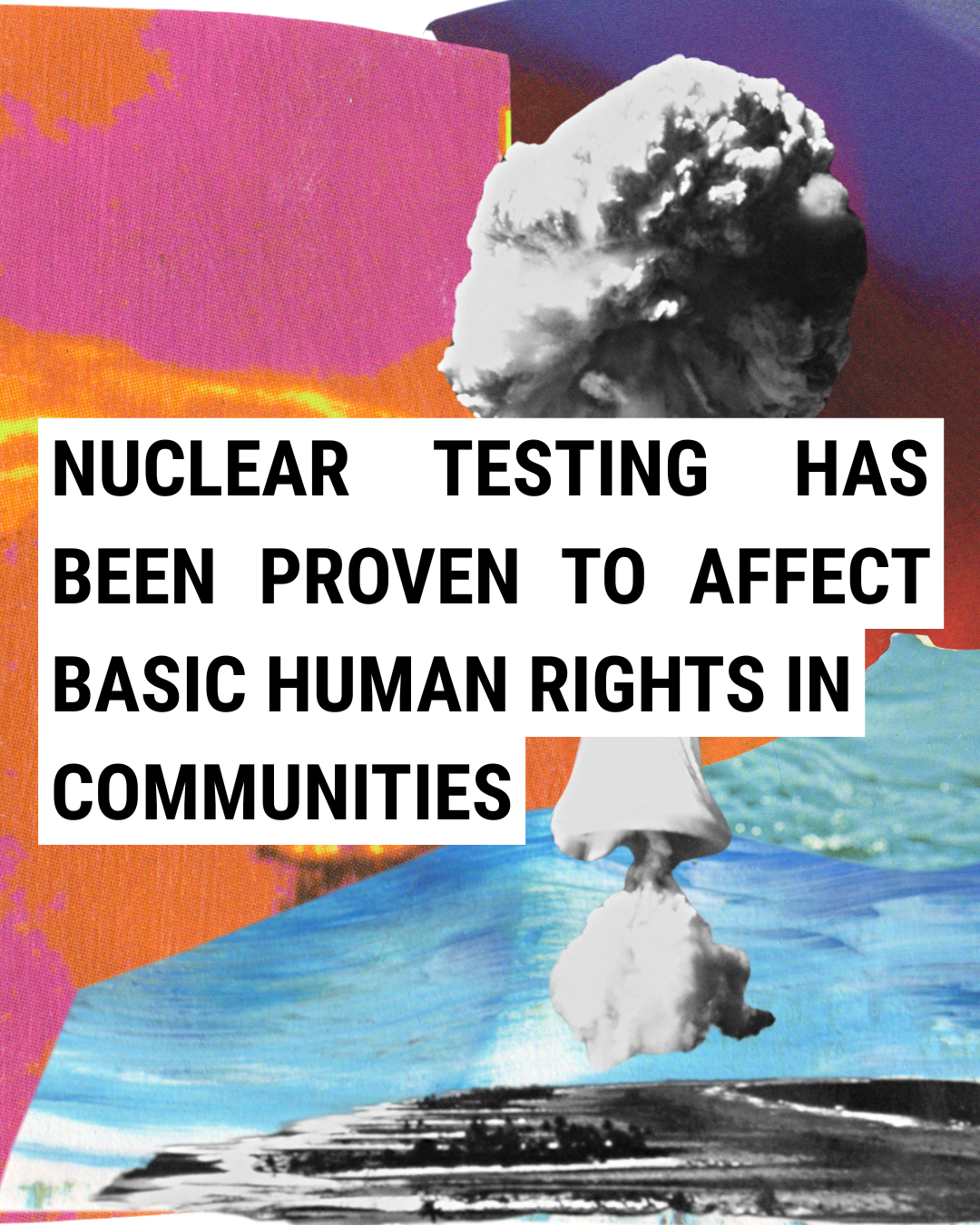
In September 2012, WILPF delivered a statement to the Human Rights Council welcoming the report of the Special Rapporteur on Toxic Waste on the human rights impacts of US nuclear testing in the Marshall Islands (A/HRC/21/48/Add.1), calling on all states to support the Marshall Islands in addressing the profound environmental, health, and human rights consequences of nuclear testing. We urged states to call for national, bilateral, and international commitment to sustain a new generation of Marshallese medical practitioners, environmental health and remediation scientists, and citizen scientists, and calling on all nuclear-armed states to publicly share research and information about the impacts of their nuclear testing on local communities.
“To ensure a robust and effective regulation of the arms trade as well as appropriate control over the circulation of existing and often illicit arms, in order to enhance the security of women and girls”
- CEDAW Committee
In 2013, WILPF submitted its first briefing on arms to the Committee on the Elimination of Discrimination against Women (CEDAW) during its review of Pakistan, marking the first time the Committee addressed the impact of small arms on women’s and girls’ rights. The Committee called on Pakistan “to ensure a robust and effective regulation of the arms trade as well as appropriate control over the circulation of existing and often illicit arms, in order to enhance the security of women and girls.”

In July 2013, WILPF DRC, supported by WILPF’s Human Rights Programme, submitted a report to the CEDAW Committee highlighting the links between small arms proliferation and sexual violence against women and girls in Eastern DRC. The report urged the DRC to ratify the Arms Trade Treaty and called for effective implementation of UN Security Council Resolution 1325 on Women, Peace and Security. Following this advocacy, the CEDAW Committee issued recommendations addressing small arms proliferation, its impact on women’s security, and, for the first time, the ratification of the ATT.
In October 2013, the UN Human Rights Council — the main UN policitical body dedicated to human rights — adopted its first resolution on the impact of arms transfers on human rights in armed conflicts (A/HRC/24/35). The resolution highlighted that arms transfers can severely affect the human rights of women and girls, increasing the risk of sexual and gender-based violence. This marked a significant step in linking arms control with gender and human rights at the UN level. WILPF actively engaged in the negotiations from the start, advocating for recognition of these gendered human rights impacts.
WILPF actively engaged in the process leading to the adoption of General Recommendation No. 30 (GR30) by the CEDAW Committee, which addresses women in conflict and post-conflict situations. From as early as July 2011, WILPF urged the Committee to consider the impact of weapons and the links between human rights violations and excessive military spending. We advocated for language connecting disarmament, human rights, and the Women, Peace and Security agenda. GR30 highlights the proliferation of small arms and light weapons as a factor exacerbating violence against women and emphasises that States parties should regulate the arms trade and control the circulation of conventional and illicit arms to prevent gender-based violence. It also recommends addressing the gendered impact of international arms transfers, including through the ratification and implementation of the Arms Trade Treaty.
Since 2014, the UN Human Rights Council has adopted resolutions on firearms and human rights. The first, titled “Human rights and the regulation of civilian acquisition, possession and use of firearms” (A/HRC/26/16), recognises that the misuse of firearms by civilians “negatively affects the human rights of civilians to life and security, including deaths of women as a result of inter-partner violence,” and calls on states to regulate civilian use of firearms to protect those rights. Building on WILPF’s advocacy and side events in Geneva highlighting women’s experiences with gun violence in both public and private spheres, we advocated for the resolution to reflect the gendered impacts of firearms, including on women’s political and economic rights.
In 2014, WILPF delivered a statement to the Human Rights Council expressing concern about the use of armed drones both for extrajudicial killings outside armed conflict and for attacks during conflict. The statement highlighted violations of international humanitarian law and human rights law, including the lack of due process for those on “kill lists,” civilian deaths and injuries, destruction of civilian objects, lack of transparency in drone operations and targeting, inadequate casualty recording, and the apparent lowering of the threshold for the use of force enabled by armed drones. The statement also welcomed the Council’s work on this issue, including the reports by Special Rapporteurs Ben Emmerson and Christoph Heyns and resolution 25/22, echoing their call for states to “comply with international law, including international humanitarian law and human rights law,” in their operation of armed drones.
The Human Rights Programme,with RCW and WILPF sections, submitted reports to to UN Committee on Economic, Social and Cultural Rights (CESCR) on UK, France, and Sweden, highlighting the human rights impacts of their arms exports to Saudi Arabia and its allies in the war in Yemen – specifically their impacts on the rights to health, education, and adequate housing of people in Yemen. As a result, the Committee recommended that the UK “conduct thorough risk assessments prior to granting licences for arms exports and to refuse or suspend such licences when there is a risk that arms could be used to violate human rights, including economic, social and cultural rights.” This was a significant acknowledgement of how arms exports can contribute to violations of economic, social, and cultural rights.
The Human Rights Programme submitted a report for the CEDAW Committee’s review of France, highlighting the long-lasting human rights impacts of French nuclear testing in colonised Algeria and French Polynesia. The Committee expressed concern that France had failed to “address the impact of the 30 years of French nuclear testing on the health of women and girls in French Polynesia,” and made recommendations on nuclear testing and gender-responsive compensation.
WILPF made a statement to the Human Rights Council highlighting the severe humanitarian situation in Yemen, where 80% of the population requires urgent assistance and over 2.5 million people have been displaced. Women and girls are disproportionately affected by forced displacement, sexual violence, trafficking, and lack of access to health care, including sexual and reproductive health services. Hospitals, schools, markets, and homes have been targeted by explosive weapons, whose wide destructive radius has damaged civilian infrastructure even when military targets are struck in populated areas.
WILPF welcomed the Commission of Inquiry’s efforts to highlight the grave human rights situation in Syria but expressed concern over the Syrian government’s persistent denial of access to its territory. We acknowledged the inclusion of some gendered analysis in the report, shedding light on the severe and disproportionate impact of the conflict on women. WILPF detailed this impact in a joint submission with Syrian women’s grassroots organisations for the UPR of Syria. We strongly encourage the Commission to expand its gendered analysis in future reports, reflecting how the armed conflict undermines women’s social, political, and economic participation in a society already affected by discrimination, patriarchy, and gender-based violence.
"Before export licenses are granted, comprehensive and transparent assessments should be conducted on the impact that the misuse of small arms and light weapons have on women, including in conflict zones."
- CEDAW Committee
Since 2017, WILPF has collaborated with the European Center for Constitutional and Human Rights (ECCHR) to urge states to uphold their international law obligations related to the arms trade. In February 2017, the two organisations submitted a joint report to the CEDAW Committee highlighting the gendered impacts of Germany’s arms exports.
The Committee recommended that “before export licenses are granted, comprehensive and transparent assessments should be conducted on the impact that the misuse of small arms and light weapons have on women, including in conflict zones.”
WILPF made a statement to the 34th session of the UN Human Rights Council (27 February to 24 March) under Item 10: Technical assistance and capacity-building, Interactive dialogue on the situation of human rights in Libya. After the 2011 NATO military operation to remove Qadhafi from power, there was a brief moment of hope for a new, inclusive and democratic country. Libya has, however, not only been rendered internally chaotic and dysfunctional, it has become: a target of extended aerial bombardment by the United States, Egypt, and possibly France; a site of Islamic extremism and home to an apparent offshoot of Daesh (ISIS); a corridor for people traffickers; a destination for desperate refugees and migrants attempting to flee to Europe; and a source of weapons flows that have destabilised fragile internal truces, Libya’s neighbours, and the region.
WILPF made a statement to the Committee on the Rights of the Child on its review of the USA’s combined Third and Fourth Periodic Report under the Optional Protocol on the involvement of children in armed conflict. WILPF highlighted the link between arms transfers and the recruitment and use of child soldiers, noting that weapons and ammunition exported by states facilitate human rights violations, including the participation of children in hostilities.
WILPF made a statement at the UN Human Rights Council 35th session, highlighting how arms transfers contribute to human rights violations and gender-based violence. The statement emphasised that human rights concerns must take priority over profits in the arms trade and welcomed the High Commissioner’s report on the impacts of arms transfers on the enjoyment of human rights.
WILPF delivered a statement during the 35th session of the UN Human Rights Council, in an interactive dialogue with the Commission of Inquiry on Syria. WILPF highlighted that the conflict has seen extensive use of explosive weapons in populated areas, causing civilian deaths, displacement, and destruction of infrastructure. Women are disproportionately affected, facing limited access to health care and reconstruction processes, and as heads of households, encounter systemic discrimination while trying to provide for their families. Displaced women are also at heightened risk of physical attack and sexual exploitation. WILPF called for greater scrutiny of weapons transfers to Syria and attention to their gendered impacts.
WILPF made a submission to the UN Human Rights Council 35th session (6 to 23 June 2017) during the clustered interactive dialogue with the Independent Expert on protection against violence and discrimination based on sexual orientation and gender identity and the Special Rapporteur on extrajudicial, summary, or arbitrary executions. We welcomed the reports of both the Independent Expert and the Special Rapporteur.
General Recommendation No. 35 urges States to address: “factors that heighten women’s risk of exposure to serious forms of gender-based violence, such as accessibility and availability of firearms, including their exportation […].”
WILPF advocated for including language on the political economy of war, arms transfers, and states’ extraterritorial obligations under CEDAW. We emphasised that the availability of small arms can facilitate or worsen violence against women, in both conflict and non-conflict settings. General Recommendation No. 35 urges States to address: “factors that heighten women’s risk of exposure to serious forms of gender-based violence, such as accessibility and availability of firearms, including their exportation […].”
WILPF provided input on weapons of mass destruction, arms transfers, and explosive weapons in populated areas. The final General Comment highlights concerns about autonomous weapon systems, stating they raise legal and ethical questions and should not be deployed unless compliant with international law. It also confirms that the threat or use of nuclear weapons is incompatible with the right to life and calls on states to prevent proliferation and ensure protection against accidental use.
"The threat or use of weapons of mass destruction, in particular nuclear weapons, which are indiscriminate in effect and are of a nature to cause destruction of human life on a catastrophic scale, is incompatible with respect for the right to life and may amount to a crime under international law. States parties must take all necessary measures to stop the proliferation of weapons of mass destruction, including measures to prevent their acquisition by non-State actors, to refrain from developing, producing, testing, acquiring, stockpiling, selling, transferring and using them, to destroy existing stockpiles, and to take adequate measures of protection against accidental use, all in accordance with their international obligations.”

WILPF and QUNO share a long-standing common vision of peace grounded in disarmament and non-violence. Since 2018, the Human Rights Programme has closely worked in partnership with the Quaker United Nations Office (QUNO) in Geneva, advocating on issues at the intersection of arms and human rights. Joint advocacy with QUNO notably includes work on the accountability of business actors involved in the arms trade.
In 2018, WILPF’s Human Rights Programme began examining the connections between conflict, business and human rights, with a particular focus on arms companies.
One of its first advocacy efforts in this area was a joint submission with the European Center for Constitutional and Human Rights (ECCHR) to the Committee on Economic, Social and Cultural Rights (CESCR), as part of its review of Germany. The submission addressed the impact of Germany’s arms transfers—especially in the context of the conflict in Yemen—on economic, social, and cultural rights. It underscored Germany’s international obligations related to arms transfers and highlighted its obligations to prevent human rights abuses by private enterprises involved in the arms trade.
“gender stereotypes, which place women and girls in a subordinate role in society and fuel expressions of masculinity related to power and domination, can exacerbate the gendered impact of the diversion and transfer of arms.”
- OHCHR report (A/HRC/44/29 , July 2020
WILPF significantly contributed to the 2019 HRC resolution on the impact of arms transfers on human rights, adopted by consensus for the first time.
The resolution highlights how arms transfers affect women and girls, especially through gender-based and domestic violence. Though WILPF advocated for broader inclusion, the scope was limited due to state pressure.
It asked OHCHR to report on these impacts—marking the first resolution to focus specifically on women and girls in the arms trade context. WILPF contributed a written submission to OHCHR, urging inclusion of gendered impacts on men, boys, LGBTIQ+ people, and the role of violent masculinities and militarism. The 2020 OHCHR report A/HRC/44/29 reflected these concerns and called f or addressing the impacts of arms transfers on the human rights of women and girls by addressing the root causes of gender-based discrimination and violence.
WILPF USA, with the support of WILPF’s Human Rights Programme and Reaching Critical Will, prepared a submission for the review of the USA raising concerns about military spending, arms exports — including to countries involved in the Yemen conflict— as well as the country’s position on nuclear weapons. Among its recommendations, the report called on the US to ratify the Arms Trade Treaty.
WILPF submitted a report to the UN Working Group on Business and Human Rights, urging stronger action on the arms industry’s responsibility to respect human rights and apply gender- and conflict-sensitive human rights due diligence in conflict zones. The report also challenged neoliberal views of sustainable peace. Despite limited references to technologies like AI and autonomous weapons, the Working Group’s final report largely overlooked the arms industry. WILPF, alongside QUNO, ECCHR, and Amnesty International, continued to advocate for its inclusion.
Following the report’s release, WILPF co-organized an online event with these partners and the Working Group, where both WILPF and Amnesty highlighted the omission. The Working Group expressed interest in further addressing the arms industry and invited input from relevant civil society actors.
In a joint report to the UN Human Rights Committee, WILPF and ECCHR raised serious concerns about France’s exports of surveillance technology to authoritarian governments such as Egypt and China. The report also raises concerns on France’s arms transfers, t provides concrete examples demonstrating the gaps in the French export control regime of surveillance technologies, including dual-use products, and highlights the responsibility to respect human rights of companies in this sector.
In a report to the UN Human Rights Committee, WILPF outlined the human rights impacts of France’s nuclear testing in Algeria and French Polynesia and exposed the serious obstacles to access to compensation for survivors. It also highlights that France’s possession and modernisation of nuclear weapons violates various obligations under international law, including human rights law. In addition, the submission raise serious concerns about the disproportionate use of force by, and militarisation of, the French police.
In July 2022, the UN Human Rights Council adopted its fifth resolution on firearms, titled “Human rights and the regulation of civilian acquisition, possession and use of firearms” (A/HRC/RES/50/12). This resolution marked a significant shift by focusing specifically on the role of firearms manufacturers and dealers.
WILPF, with QUNO, contributed significantly to the development of the resolution, which urges states to apply the UN Guiding Principles on Business and Human Rights to the firearms industry – calling for human rights due diligence and accountability.
This marks an important step in integrating the business and human rights perspective into UN discussions on firearms.
Building on advocacy around the UN Working Group’s 2020 report, WILPF, QUNO, ECCHR, and Amnesty International continued pushing for the application of the UN Guiding Principles on Business and Human Rights (UNGPs) in the arms sector.
In August 2022, the Working Group released its Information Note on responsible business conduct in the arms sector—the first UN guidance linking the UNGPs to this sector. It stresses that arms companies cannot hide between States’ arms exports authorisation processes and must abide by the UNGPs, making it a key tool for holding arms companies accountable for their human rights impacts.
Following the adoption of the UN Human Rights Council’s resolution on firearms (A/HRC/RES/50/12), which requested a report from the Office of the High Commissioner for Human Rights (OHCHR) with a focus on business enterprises, particularly the firearms industry, WILPF submitted input to OHCHR in February 2023.
WILPF’s submission highlighted the industry’s lack of due diligence, the militarised, sexist and racist marketing and harmful lobbying, and the relocation of operations to bypass stricter national regulations.
The OHCHR report (A/HRC/53/49) urges states to: review laws on firearm acquisition, possession and use; impose requirements on manufacture and sale, including enhanced due diligence; and push the industry to prevent abuses, including via marketing reviews. It marks the first UN-level scrutiny of the firearms industry, applies the UN Guiding Principles on Business and Human Rights; urges companies to conduct human rights due diligence and supports stronger regulation and civil society advocacy.
In the context of the negotiations of European Union’s new legislation requiring companies operating in the EU to assess their human rights and environmental impacts — the EU Corporate Sustainability Due Diligence Directive— WILPF’s Human Rights Programme led a joint NGO statement calling on the European Parliament and EU Member States to ensure that the new law would fully cover the arms sector and dual-use products. The statement was endorsed by over 60 civil society organisations, reflecting strong support for holding the arms industry accountable under the Directive, which was eventually defeated due to lobbying by industry and arms-producing States.

In a joint submission to the Universal Periodic Review of Russia, WILPF and International Campaign to Abolish Nuclear Weapons (ICAN) raised serious concerns over the human rights and environmental impacts of Russia’s nuclear policies, condemned its nuclear threats during the war in Ukraine, and urged accountability for victims of Soviet-era nuclear testing, particularly on Indigenous Peoples’ lands in Kazakhstan and Siberia.
Separately, WILPF submitted a report on Russia’s arms trade, military spending, and use of explosive weapons, using international human rights and humanitarian law to challenge the practices of a non-State Party to the Arms Trade Treaty (ATT). This reinforced WILPF’s core message that all states must strictly regulate the arms trade, with ATT States Parties carrying additional obligations.
In November 2023, as part of advocacy addressing Israel’s crimes, including genocide, against Palestinians, WILPF, Al-Haq, and ISHR issued a joint statement on states’ legal obligations to end arms transfers and military support to Israel, calling for a two-way arms embargo, an immediate halt to transfers, and for transit countries to block weapons shipments. Endorsed by over 170 organisations, it highlighted state and corporate complicity and was used in further advocacy with UN human rights mechanisms.
In February 2024, UN Special Procedures, including the Working Group on Business and Human Rights, called for an immediate stop to arms exports to Israel. In June 2024, they reiterated this, warning that states and companies risk complicity in international crimes and explicitly naming arms manufacturers and financial institutions involved.
In January 2024, WILPF submitted input to OHCHR’s report on the impact of arms transfers on human rights, focusing on access to information – as requested by the UN HRC’s resolution (A/HRC/53/15). WILPF’s submission stressed the role of access to information on arms transfers in preventing and stopping serious violations of human rights and international humanitarian law, ensuring accountability, and enabling access to justice and remedy, while noting repression and criminalisation of civil society exposing arms-related practices.
The OHCHR report (A/HRC/56/42), released in April 2024, reflected WILPF’s concerns, including on access to justice, remedy, and parliamentary scrutiny of arms exports.
In February 2024, WILPF, Al-Haq, and ISHR—supported by Saferworld’s analysis on Arms Trade Treaty (ATT) obligations and UK arms export controls—submitted information to the UN Human Rights Committee on the UK’s arms transfers to Israel.
The submission detailed loopholes in UK arms export laws, reminded the UK of its obligations under the International Covenant on Civil and Political Rights (ICCPR), International Humanitarian Law (IHL), international criminal law, and the ATT to stop arms transfers and military assistance to Israel, including via third states such as the US, and called for revoking all licences for arms to Israel. WILPF also delivered an oral statement and joined an NGO briefing with Committee members.
It was the only submission raising the issue of UK arms transfers to Israel among a large number of both national and international NGOs which brought information on the UK.
We identify advocacy opportunities within the UN human rights system and provide pathways for WILPF Sections and Groups and national partners to use these opportunities.
Through this work, we help to bring their contextualised feminist analysis of conflict, violence and discrimination to the attention of UN human rights bodies, the Geneva diplomatic community and other relevant actors.
We also support advocacy and awareness-raising initiatives that translate UN human rights recommendations into local and national actions to advance the changes they are campaigning for. And we advocate for the rights of human rights defenders and civil society participation within UN human rights bodies.
We offer training and opportunities for cross-learning, provide advice on written submissions and statements and offer strategy advice, including on how to use advocacy outcomes at the national level. As part of our advocacy, we also prepare reports, statements and other materials for use with UN human rights bodies in order to push for accountability. Through a combination of public and private advocacy activities, we seek to influence policy at both national and international levels, much as our founders aimed to do in the face of the global challenges of their time.
A core part of our work is to strategically use international human rights law and frameworks not only to advocate for their implementation, but also to push for a progressive interpretation and evolution of these norms.
As part of this, we develop legal analysis to connect states’ obligations concerning disarmament law, armed conflict, gender and socio-economic justice. For example, we use human rights advocacy to demand an end to militarism, including by pushing for nuclear disarmament, reparation for past nuclear testing, reduction in military spending and halting production and transfers of weapons and surveillance technologies.
As WILPF believes that peace can only be attained when the rights of everyone, everywhere are respected and fulfilled, a core tenet of our legal human rights advocacy is also to push for accountability of states and other actors.
This includes accountability not only for the human rights of individuals on their territory but also to keep them accountable for their actions beyond their borders (so-called extraterritorial human rights obligations). This is particularly relevant to issues related to foreign policy, including the arms trade, conflict and environmental issues.
All reports and statements are available on the WILPF Advocacy Documents database. These include statements to the UN Human Rights Council, and submissions to the Universal Periodic Review, the CEDAW Committee, the Committee on Economic, Social and Cultural Rights (CESCR) and the Human Rights Committee.
In this video, we explore how WILPF National Sections and partners have used the Universal Periodic Review (UPR) to advance women’s rights and peace at the national and international levels. […]
...
Learn how the Universal Periodic Review (UPR) works and how civil society – including WILPF National Sections – can use it to advocate for real human rights change. We break […]
...
In this second half of our series, we explore how the CEDAW Committee serve as powerful advocacy platforms for addressing extraterritorial human rights obligations—the responsibility of States to prevent and […]
...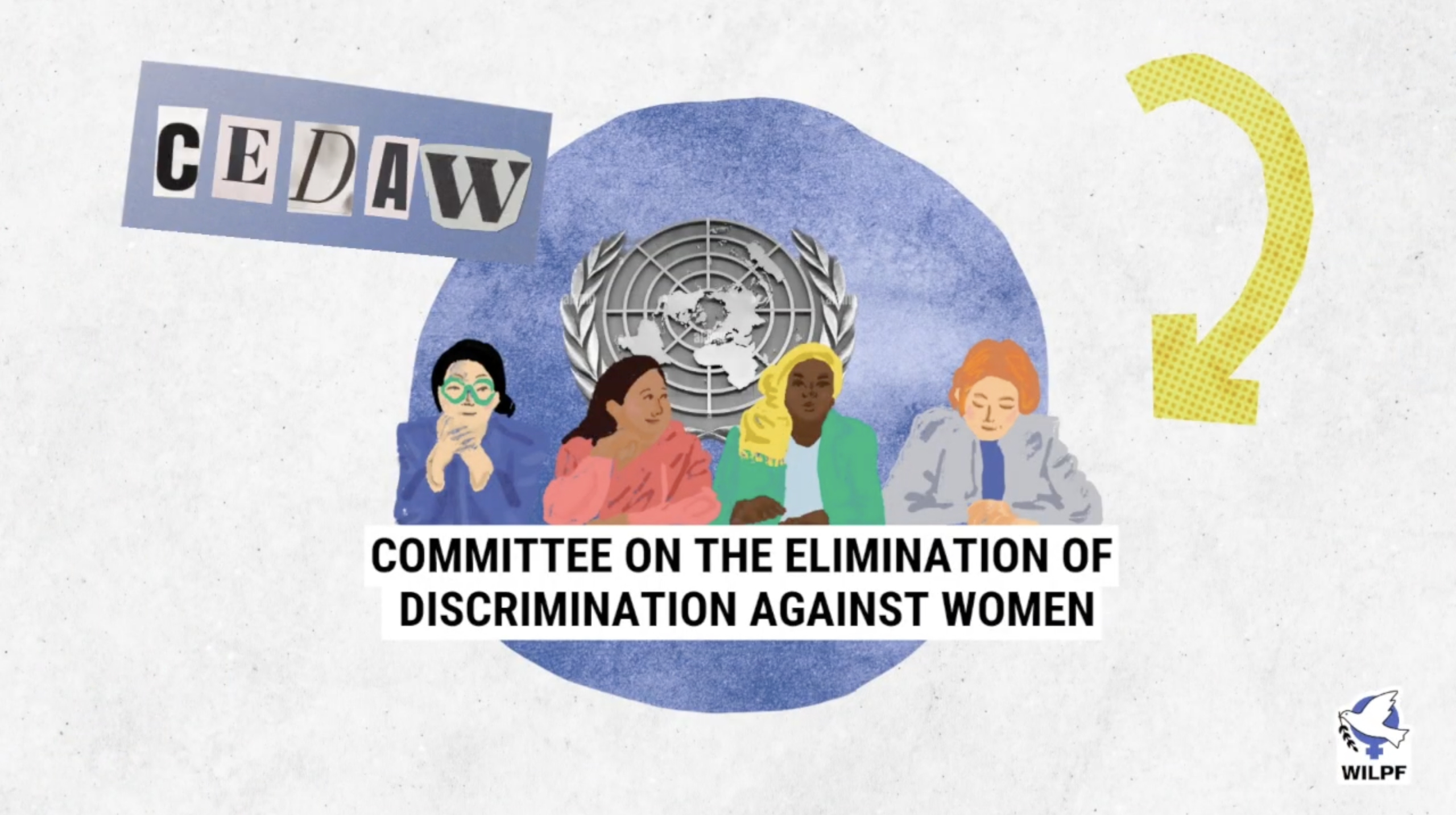
This video provides a concise introduction to the United Nations Committee on the Elimination of Discrimination Against Women—better known as the CEDAW Committee. Why does this Committee matter, and how […]
...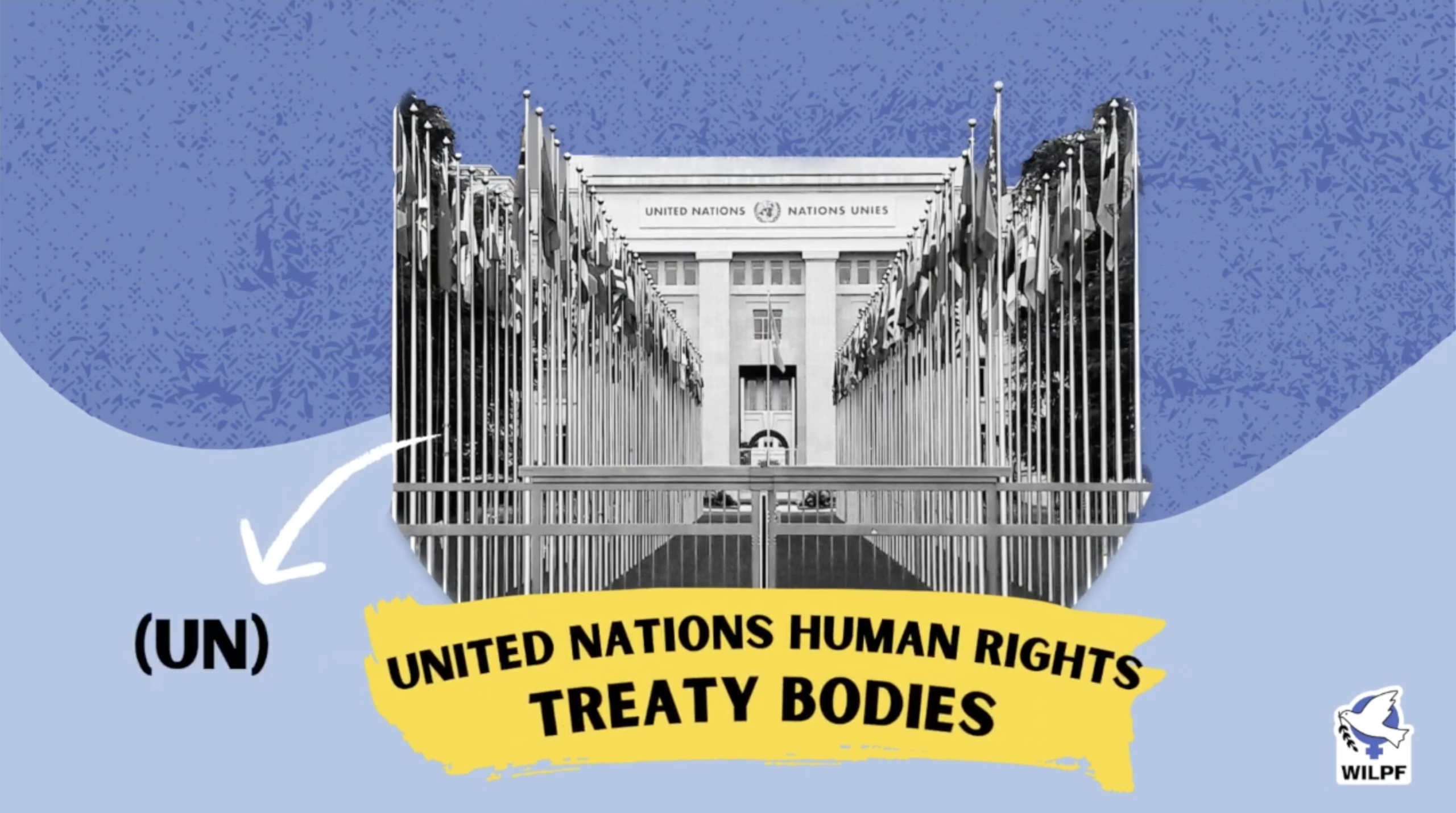
This video offers a concise introduction to the UN Human Rights Treaty Bodies, how they function and advocacy entry points for civil society. Available in English and French. CREDITS Illustration […]
...
The Women’s International League for Peace and Freedom (WILPF), WILPF Spain, and LIMPAL Colombia, made the following recommendations on the Draft of General Recommendation No. 30 (2013) on “women in […]
...
Matt Mahmoudi (he/him) is a lecturer, researcher, and organizer. He’s been leading the “Ban the Scan” campaign, Amnesty International’s research and advocacy efforts on banning facial recognition technologies and exposing their uses against racialized communities, from New York City to the occupied Palestinian territories.

Berit Aasen is a sociologist by training and has worked at the OsloMet Metropolitan University on Oslo. She has 40 years of experience in research and consultancy in development studies, including women, peace, and security, and in later years in asylum and refugee studies. Berit Aasen joined WILPF Norway five years ago. She is an alternate member of the National Board of WILPF Norway, and representing WILPF Norway in the UN Association of Norway, the Norwegian 1325 network and the Norwegian Women’s Lobby. Berit Aasen has been active in the WILPF European Liaison group and is committed to strengthening WILPF sections and membership both in Europe and relations across continents.

Your donation isn’t just a financial transaction; it’s a step toward a more compassionate and equitable world. With your support, we’re poised to achieve lasting change that echoes through generations. Thank you!

Prior to being elected Vice-President, Melissa Torres was the WILPF US International Board Member from 2015 to 2018. Melissa joined WILPF in 2011 when she was selected as a Delegate to the Commission on the Status of Women as part of the WILPF US’ Practicum in Advocacy Programme at the United Nations, which she later led. She holds a PhD in Social Work and is a professor and Global Health Scholar at Baylor College of Medicine and research lead at BCM Anti-Human Trafficking Program. Of Mexican descent and a native of the US/Mexico border, Melissa is mostly concerned with the protection of displaced Latinxs in the Americas. Her work includes training, research, and service provision with the American Red Cross, the National Human Trafficking Training and Technical Assistance Centre, and refugee resettlement programs in the U.S. Some of her goals as Vice-President are to highlight intersectionality and increase diversity by fostering inclusive spaces for mentorship and leadership. She also contributes to WILPF’s emerging work on the topic of displacement and migration.

Jamila Afghani is the President of WILPF Afghanistan which she started in 2015. She is also an active member and founder of several organisations including the Noor Educational and Capacity Development Organisation (NECDO). Elected in 2018 as South Asia Regional Representative to WILPF’s International Board, WILPF benefits from Jamila’s work experience in education, migration, gender, including gender-based violence and democratic governance in post-conflict and transitional countries.

Sylvie Jacqueline NDONGMO is a human rights and peace leader with over 27 years experience including ten within WILPF. She has a multi-disciplinary background with a track record of multiple socio-economic development projects implemented to improve policies, practices and peace-oriented actions. Sylvie is the founder of WILPF Cameroon and was the Section’s president until 2022. She co-coordinated the African Working Group before her election as Africa Representative to WILPF’s International Board in 2018. A teacher by profession and an African Union Trainer in peace support operations, Sylvie has extensive experience advocating for the political and social rights of women in Africa and worldwide.
In response to the takeover of Afghanistan by the Taliban and its targeted attacks on civil society members, WILPF Afghanistan issued several statements calling on the international community to stand in solidarity with Afghan people and ensure that their rights be upheld, including access to aid. The Section also published 100 Untold Stories of War and Peace, a compilation of true stories that highlight the effects of war and militarisation on the region.
Lorem ipsum dolor sit amet, consectetur adipiscing elit. Mauris facilisis luctus rhoncus. Praesent eget tellus sit amet enim consectetur condimentum et vel ante. Nulla facilisi. Suspendisse et nunc sem. Vivamus ullamcorper vestibulum neque, a interdum nisl accumsan ac. Cras ut condimentum turpis. Vestibulum ante ipsum primis in faucibus orci luctus et ultrices posuere cubilia curae; Curabitur efficitur gravida ipsum, quis ultricies erat iaculis pellentesque. Nulla congue iaculis feugiat. Suspendisse euismod congue ultricies. Sed blandit neque in libero ultricies aliquam. Donec euismod eget diam vitae vehicula. Fusce hendrerit purus leo. Aenean malesuada, ante eu aliquet mollis, diam erat suscipit eros, in.
WILPF uses feminist analysis to argue that militarisation is a counter-productive and ill-conceived response to establishing security in the world. The more society becomes militarised, the more violence and injustice are likely to grow locally and worldwide.
Sixteen states are believed to have supplied weapons to Afghanistan from 2001 to 2020 with the US supplying 74 % of weapons, followed by Russia. Much of this equipment was left behind by the US military and is being used to inflate Taliban’s arsenal. WILPF is calling for better oversight on arms movement, for compensating affected Afghan people and for an end to all militarised systems.
Mobilising men and boys around feminist peace has been one way of deconstructing and redefining masculinities. WILPF shares a feminist analysis on the links between militarism, masculinities, peace and security. We explore opportunities for strengthening activists’ action to build equal partnerships among women and men for gender equality.
WILPF has been working on challenging the prevailing notion of masculinity based on men’s physical and social superiority to, and dominance of, women in Afghanistan. It recognizes that these notions are not representative of all Afghan men, contrary to the publicly prevailing notion.
In WILPF’s view, any process towards establishing peace that has not been partly designed by women remains deficient. Beyond bringing perspectives that encapsulate the views of half of the society and unlike the men only designed processes, women’s true and meaningful participation allows the situation to improve.
In Afghanistan, WILPF has been demanding that women occupy the front seats at the negotiating tables. The experience of the past 20 has shown that women’s presence produces more sustainable solutions when they are empowered and enabled to play a role.